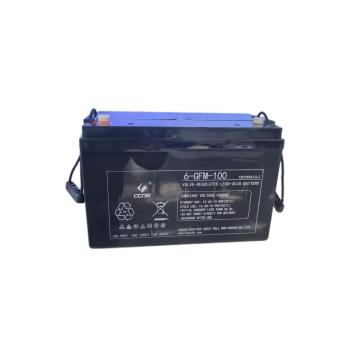
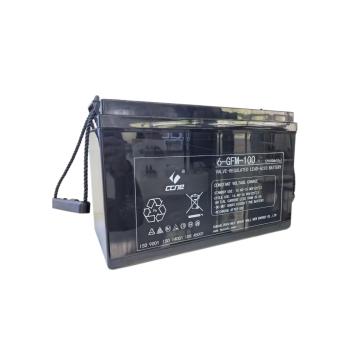
CCNE Valve-Regulated Sealed Lead-Acid Battery (VRLA Battery for short) is a high-performance backup power and energy storage product launched by Hunan Great Wall New Energy Technology Co., Ltd. Adopting high-tin multi-element lead-calcium alloy plates and a fully sealed starved-electrolyte structure, it boasts core advantages such as maintenance-free operation, long service life, deep cycle capability, and high reliability. It is widely used in telecommunications, electric power, new energy, and other fields.
II. Core Product Features
1. Material and Structural Advantages
·Plate Technology: The plate grid is made of high-tin multi-element lead-calcium alloy, featuring superior electrical conductivity and corrosion resistance; imported graphene is added to the active material as a conductive agent, significantly improving charge-discharge efficiency and cycle life.
·Sealed Design: Adopting a high-temperature curing process combined with a fully sealed structure, it eliminates the need for electrolyte refills during use, produces no acid mist emissions, is corrosion-free and pollution-free, achieving true maintenance-free operation.
·Cycle Performance: Excellent deep-cycle discharge performance with a high number of deep discharge cycles. It accepts 0.2C10 high-current charging, effectively shortening the charging time.
·Environmental Adaptability: Wide operating temperature range, maintaining strong discharge performance even in low-temperature environments to meet demanding working conditions.
2. Safety and Environmental Protection Features
·Built-in safety valve and leak-proof structure to prevent electrolyte leakage and gas expansion risks.
·Complies with environmental protection standards; the battery is recyclable, with no risk of heavy metal pollution.
·Flame-retardant casing and explosion-proof design ensure safe operation under extreme conditions.
III. Main Application Scenarios
Suitable for backup power and energy storage systems in the following fields:
·Telecommunications: Railway communication, mobile communication, and mining communication base stations
·Electric Power: Power substations, wind/photovoltaic energy storage systems
·Commercial & Civilian: UPS uninterruptible power supplies for hospitals, banks, and data centers
·Industrial: Emergency lighting, security systems, and industrial control equipment
IV. Operation Instructions
1. Installation Requirements
·Installation Environment: Well-ventilated, clean, and dry, away from direct sunlight and high-temperature heat sources. The recommended ambient temperature is 20℃~25℃.
·Installation Method: Can be placed upright or horizontally; inversion is strictly prohibited. Maintain a spacing of ≥10mm between battery packs for heat dissipation.
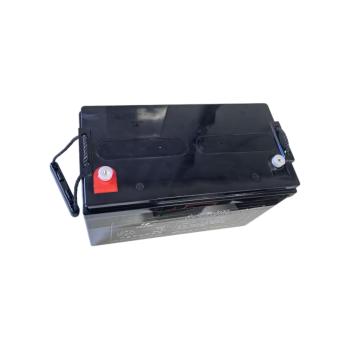
·Wiring Specifications: Securely connect the positive and negative terminals to avoid short circuits. Use insulated tools to prevent electric shock.
2. Charging Specifications
·Standby Use: Charging voltage is 2.27V~2.30V per cell (at 25℃); long-term float charging can extend battery life.
·Cycle Use: Charging voltage is 2.40V~2.45V per cell (at 25℃), with an initial charging current not exceeding 0.2C10 (e.g., ≤100A for 500Ah models).
·Temperature Compensation: For every 1℃ change in ambient temperature, adjust the float/cycle charging voltage by approximately -3mV/℃/cell.
3. Discharge and Maintenance
·Discharge Current: It is recommended not to exceed 0.3C10. Avoid deep over-discharge (a discharge depth >80% will accelerate life degradation).
·Charging Timeliness: The battery must be fully recharged within 24 hours after discharge to prevent plate sulfation.
·Regular Inspection: Inspect the battery pack voltage and connection status every 3~6 months. Clean the terminals to prevent oxidation and corrosion.
·Prohibited Actions: Short-circuiting, disassembling the battery, or disposing of it in fire or water is strictly prohibited.

 Unverified Supplier