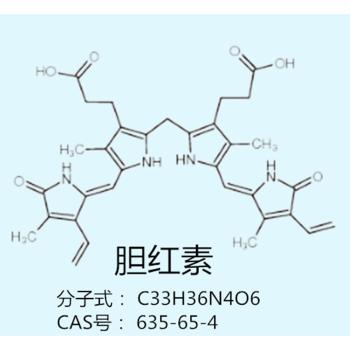
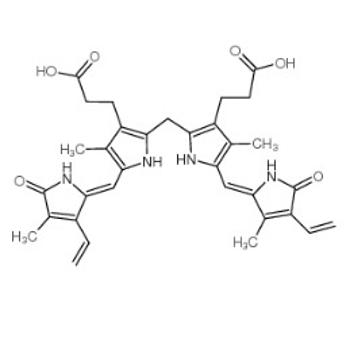
**English Synonyms:** Hematoidin; Bilirubin (ex pig); Bilirubin (alpha); 2,17-diethenyl-1,10,19,22,23,24-hexahydro-3,7,13,18-tetramethyl-1,19-dioxo-21H-biline-8,12-dipropanoic acid
**CAS No.:** 635-65-4
**Molecular Formula:** C₃₃H₃₆N₄O₆
**Molecular Weight:** 584.66
**EINECS No.:** 211-239-7
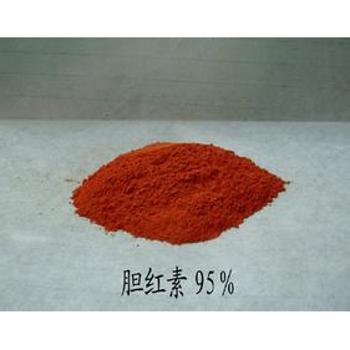
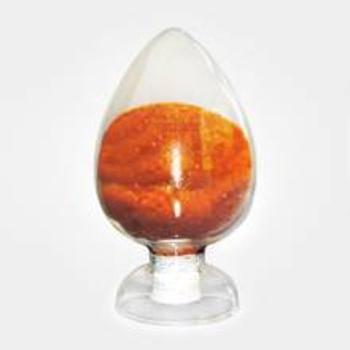
**Product Characteristics:** This product is primarily derived as a reduction product of heme—originating from the hemoglobin within senescent erythrocytes—following a series of catabolic processes. It appears as golden-yellow or deep reddish-brown monoclinic crystals, and is odorless and tasteless. It is soluble in organic solvents such as benzene, chloroform, and carbon disulfide; it is also soluble in a hot mixture of ethanol and chloroform. The sodium salt is readily soluble in water, whereas the calcium, magnesium, and barium salts are insoluble in water.
**Product Applications:** A major component resulting from the breakdown of heme; the primary pigment found in bile. It functions as an antioxidant and an effective scavenger of hydrogen peroxide radicals, thereby protecting cellular membrane lipids from oxidation by these reactive species. Bilirubin possesses a wide range of pharmacological properties and serves as the primary raw material for the production of artificial *Calculus Bovis* (artificial ox gallstone). Pharmacological studies have demonstrated that it exhibits significant inhibitory effects against W256 tumors; furthermore, its inactivation rate and inhibitory index against the Japanese encephalitis virus are 1 to 1.5 times higher than those of deoxycholic acid and cholic acid. It also functions as an effective therapeutic agent for liver diseases, promoting the proliferation of new cells without causing damage to hepatic tissue, and is utilized in the treatment of conditions such as serum hepatitis and liver cirrhosis. Additionally, bilirubin exerts sedative, anticonvulsant, antipyretic, and hypotensive effects, and promotes the regeneration of erythrocytes.

 Unverified Supplier