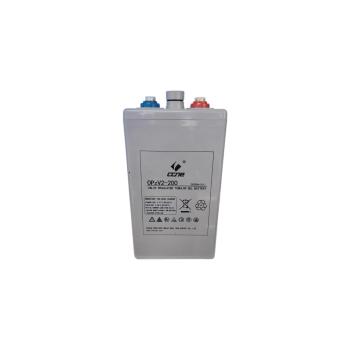
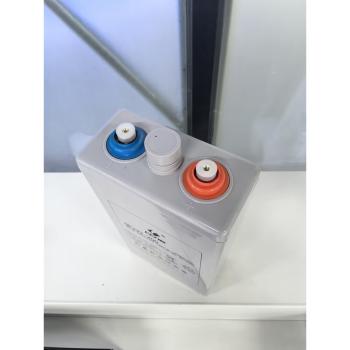
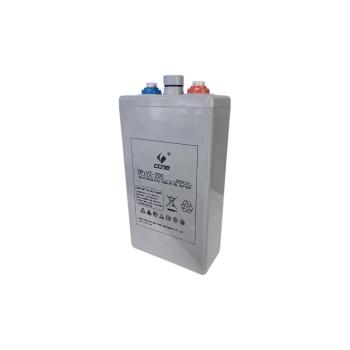
OPZV Lead‑Carbon Solid-State Energy Storage Battery-SHAOYANG
FOB Price :
QTY:
Price
Supply Ability : 15PCS/ Day
Min.Order : PCS
Quantity:
-
+
Total Cost :
Unverified Supplier
Packing Information
Pcs/Carton: N/A
Packing Size/Carton:N/A
Packing Vol/Carton: N/A
N.W./Carton: N/A
G.W./Carton: N/A
QTY in 40HQ: N/A
QTY in 40GP: N/A
QTY in 20GP: N/A
OPzV Lead-Carbon Solid-State Energy Storage Battery Product Manual
I.Product Overview The OPzV Lead-Carbon Solid-State Energy Storage Battery is a new-generation high-performance energy storage product launched by Hunan Great Wall New Energy Technology Co., Ltd. (CCNE / FURONG brand). Adopting tubular plate and solid-state electrolyte technology, it boasts core advantages such as long service life, deep cycle capability, high safety, and maintenance-free operation. It is widely used in photovoltaic power generation, industrial and commercial energy storage, telecommunications, and other fields.
II. Core Product Features
1. Advanced Technology • Plate Technology: The positive plate is die-cast under 10MPa high pressure to form a dense metallographic structure with excellent corrosion resistance. • Separator & Casing: Imported high-porosity, high-strength PVC-SiO₂ composite flame-retardant separators are used; the casing is made of modified high-strength flame-retardant ABS material, and the glue-filling process adopts intelligent vacuum quantitative technology.
2. Innovation • Grid Material: Self-developed seven-element alloy grid with low resistance and corrosion resistance, improving charge acceptance by 2.5 times and extending deep cycle life by 1.3 times. • Curing Process: High-temperature, high-humidity, and pressure-applied process precisely controls the structure of 4BS and 3BS in the active material, alleviating the capacity fading issue of solid-state batteries. • Electrolyte & Formation: Self-developed low-internal resistance, pollution-free solid electrolyte; internal formation adopts a new pulse-based, efficient and environmentally friendly technology.
3. Maturity • Aligns with national "dual carbon" strategy and policy guidelines such as the 14th Five-Year Plan for New Energy Storage Development. • Highly automated manufacturing processes with smooth workflows, suitable for large-scale industrial production.
4. Outstanding Advantages • Features deep cycle charge and discharge, large capacity, non-combustible and explosion-proof properties, solid electrolyte, environmental friendliness, and side-installable use, with a service life far exceeding that of traditional batteries.
III. Main Application Scenarios Widely applicable to the following energy storage fields: • New Energy: Photovoltaic power stations, industrial and commercial energy storage, centralized energy storage stations, residential energy storage, street lamp energy storage • Industry & Transportation: Backup power and energy storage systems for transportation, telecommunications, petroleum, marine, meteorology, and other industries
IV. Operation Instructions
1. Installation Requirements • Environment: Install in a well-ventilated, dry, and clean indoor environment, away from direct sunlight and high-temperature heat sources. The recommended ambient temperature is 15℃~25℃. • Placement: Can be placed upright or on its side; inversion is strictly prohibited. Maintain a spacing of ≥10mm between battery packs for heat dissipation. • Wiring: Securely connect the positive and negative terminals. Use insulated tools to avoid short circuits and electric shock risks.
2. Charging Specifications • Float Use: Recommended charging voltage is 2.27V~2.30V per cell (at 25℃); long-term float charging can extend battery life. • Cycle Use: Charging voltage is 2.40V~2.45V per cell (at 25℃), with an initial charging current not exceeding 0.2C10 (e.g., ≤100A for 500Ah models). • Temperature Compensation: For every 1℃ change in ambient temperature, adjust the charging voltage by approximately -3mV/℃/cell.
3. Discharge & Maintenance • Discharge Current: It is recommended not to exceed 0.3C10. Avoid deep over-discharge (a discharge depth >80% will accelerate life degradation). • Charging Timeliness: The battery must be fully recharged within 24 hours after discharge to prevent plate sulfation. • Regular Inspection: Inspect the battery pack voltage and connection status every 3~6 months. Clean the terminals to prevent oxidation and corrosion. • Prohibited Actions: Short-circuiting, disassembling the battery, or disposing of it in fire or water is strictly prohibited.
V. Safety & Environmental Protection Notes • Built-in safety valve and leak-proof structure, with no acid mist emissions, pollution, or corrosion. • The battery casing is made of flame-retardant material with explosion-proof properties, ensuring safer use. • Waste batteries must be recycled by professional institutions to avoid heavy metal environmental pollution.

 Unverified Supplier